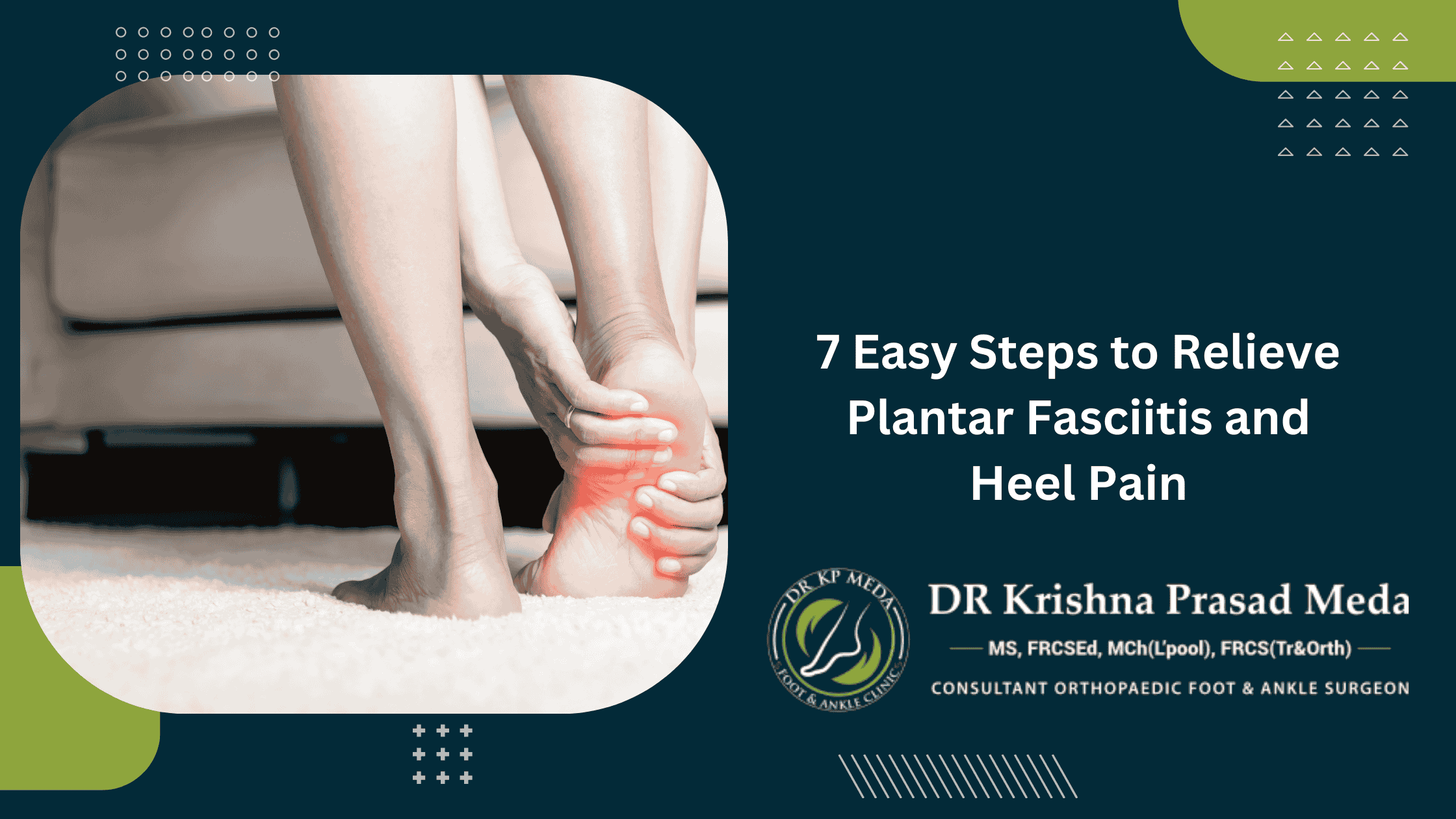
7 Easy Steps to Relieve Plantar Fasciitis and Heel Pain
Do you feel a sharp and stabbing pain in your heel, especially when you take the first steps in the morning? It’s a common condition called plantar fasciitis that causes persistent heel pain among people who spend most of their time standing, walking, or exercising.
Heel pain can be annoying, but following a few practical strategies ensures effective relief without the need for a surgical procedure.
In this blog, we’ll explore 7 simple steps for relieving plantar fasciitis and heel pain.
7 Easy Steps to Relieve Plantar Fasciitis and Heel Pain
STEP 1 - Rest and Apply Ice for Immediate Relief
REST – When pain flares up, it’s essential to give your feet a break from high-impact activities such as running. It allows the inflamed tissue to calm down and reduce pain.
ICE – Apply ice pack wrapped in a cloth to your heel. Do it for 15 to 20 minutes and 3 to 4 times per day.
For effective results, roll a frozen water bottle under your foot for 10–15 minutes; it also provides a gentle massage.
STEP 2 - Gentle Plantar Fasciitis Stretches
Starting with gentle and consistent plantar fasciitis stretches is essential to relieve tension in the plantar fascia. The stretches reduce inflammation, improve flexibility, and speed up the recovery process.
Below are some of the gentle stretches,
- Calf stretch: Press your hands against the wall, step back with one foot while keeping your feet flat. Stay like this for about half a minute.
- Plantar fascia stretch: Sit down, cross one leg over the other, and pull your toes back until you feel a stretch along the arch.
- Towel stretch: Loop a towel under the ball of your foot and pull gently.
The stretching exercises for plantar fasciitis should be done 2–3 times per day. Over time, they also help you notice the early signs plantar fasciitis is healing, such as reduced morning pain and improved mobility.
STEP 3 - Supportive Footwear or Orthotics
Wearing uncomfortable shoes will trigger heel pain. It’s a crucial and most prominent step in the 7 Easy Steps to Relieve Plantar Fasciitis and Heel Pain.
How to get proper footwear?
- Never use flat or thin slippers
- Don’t walk barefoot
- Use shoes with good arch support
- Use shoes with slight (1 or 2 cm) heels, which reduces the fascia strain
- Choose over-the-counter arch supports or custom orthotics can provide crucial cushioning and correction.
STEP 4 - Targeted Exercises for Plantar Fasciitis
Apart from gentle stretching, targeted exercises can improve muscle support and help prevent recurrence of plantar fasciitis.
Some of the exercises include,
- Towel scrunches: Use your toes to pull a towel towards you.
- Marble pick-ups: Pick up small objects with your toes to build intrinsic muscle strength.
- Heel raises: Get on the edge of a stair, then lift one heel at a time. After that, drop it down slow. Do this again, switching sides each round.
STEP 5 - Use Night Splints for Morning Relief
Severe heel pain in the morning occurs when the plantar fascia shortens and tightens overnight.
Wearing a night splint can reduce the intensity of morning pain, offering a clear sign plantar fasciitis is healing.
STEP 6 - Step out of High-Impact Activities
Your foot needs time to heal, especially during flare-ups. A few activities, such as running, long-distance walking, or jumping, can worsen the heel pain.
But, consider low-impact activities such as, swimming, cycling, and Elliptical training.
STEP 7 - Healthy Weight Reduce Foot stress
Weight gain increases the load on your body, causing strain on the arches and heels. Weight changes can,
- Reduce lower daily foot strain
- Reduce inflammation
- Improved results after exercises for plantar fasiiticis.
While these “7 Easy Steps to Relieve Plantar Fasciitis and Heel Pain “, are practical, some people may experience persistent heel pain after consistent home exercises. In such case, you need to consult a specialist.
How to Know the Signs Plantar Fasiicitis is Healing?
Some of the signs that plantar fasciitis is healing,
- Less heel pain during the first steps of the morning
- Reduced sensitivity when applying pressure to the heel
- Improved tolerance for daily activities
- Ability to perform exercises for plantar fasciitis with greater ease
When Do You Need Expert Care for Plantar Fasciitis?
Some of the
Even after weeks of home management, if you still have heel pain, it’s essential to consider consulting an orthopaedic foot and ankle specialist, Dr. K. P. Meda.
When should you approach Dr K P Meda?
If you have issues such as severe plantar fascitis, chronic inflammation, or underlying biomechanical problems, you often need professional guidance.
How can we help you relieve plantar fasciitis and heel pain?
✔️Using in-depth diagnostic techniques, he will diagnose the cause of plantar fasciitis.
✔️Provide advanced treatment options
✔️Advanced plantar fasciitis stretches and other tailored exercises for quick relief
✔️Rehabilitation plans and long-term foot health strategies.
signs that plantar fasciitis is healing,
- Less heel pain during the first steps of the morning
- Reduced sensitivity when applying pressure to the heel
- Improved tolerance for daily activities
- Ability to perform exercises for plantar fasciitis with greater ease
Dr K P Meda - UK-Trained Expertise in Non-Interventional Foot and Ankle Care in Dubai
Dr. K. P. Meda, a leading British Orthopaedic Foot and Ankle Specialist in Dubai, brings over 15 years of Consultant-level experience, closely following British methods of surgical practice.
He believes in listening carefully to the patient, conducting appropriate investigations, and only resorting to surgery when all reasonable alternative options have been tried.
For Lasting Foot Comfort - Book your consultation with Dr K P Meda
If you are seeking lasting relief and want to take decisive action on your plantar fasciitis or other complex foot and ankle conditions, book your consultation with Dr K P Meda today!
Recent Post

What Are 7 Common Foot Problems
What Are 7 Common Foot Problems? Know the 7 Foot Issues That Could Be Slowing You Down! Your feet carry you through every step of
7 Easy Steps to Relieve Plantar Fasciitis and Heel Pain
7 Easy Steps to Relieve Plantar Fasciitis and Heel Pain Do you feel a sharp and stabbing pain in your heel, especially when you take

Tailor’s Bunion (Bunionette) – Surgical Techniques and Considerations
Tailor’s Bunion (Bunionette) – Surgical Techniques and Considerations Comfort, Confidence, & Care – Walk without Pain Tailor’s Bunion (Bunionette) is a painful bony bump that

The Role of Regular Podiatric Visits in Diabetic Foot Health
The Role of Regular Podiatric Visits in Diabetic Foot Health Every Step Matters – Lifelong mobility with regular podiatrist visits in Diabetic foot For people