
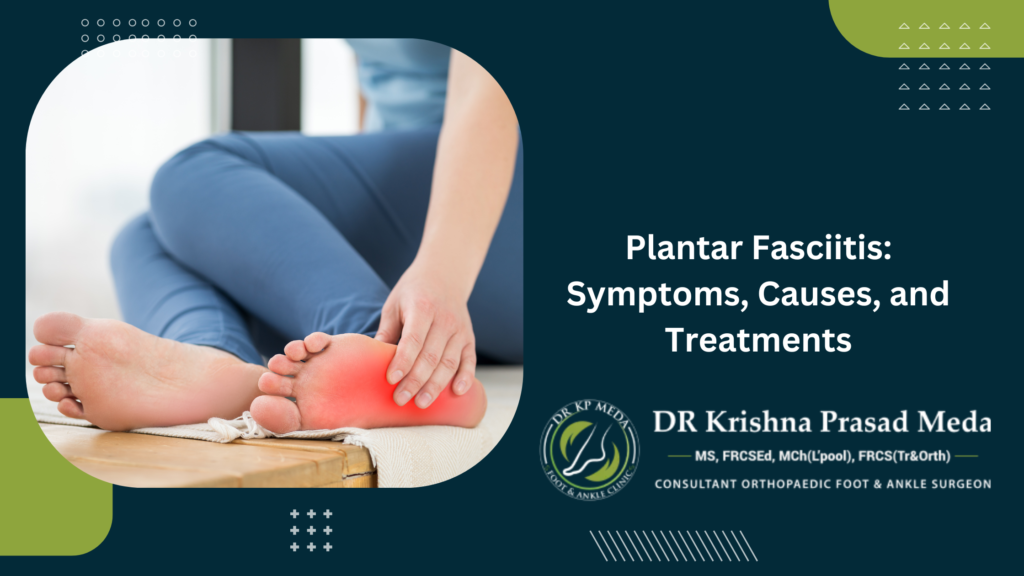

Plantar Fasciitis: Symptoms, Causes, and Treatments
You wake up and take the first step – a sharp stabbing pain shoots through your heel. If it’s familiar, your body signals that something needs attention. Plantar fasciitis affects millions, from recreational joggers to office workers who spend long hours on their feet.
Plantar fasciitis treatment, when started early and guided by the right specialist, can get you back on your feet faster and more completely than most people expect.
At Dr K P Meda’s practice, patients receive specialized, evidence-based care designed not just to relieve pain, but to restore mobility and prevent recurrence.
In this blog, you’ll find everything you need to understand plantar fasciitis, identify it early, and explore the full spectrum of plantar fasciitis treatment options available to you.
What is plantar fasciitis?
Plantar fasciitis happens when there is inflammtion of the plantar fascia. It’s a thick band of tissue that connects your heel bone to your toes and supports the arch of your foot. When this tissue is strained or overused, it develops small tears, which can lead to irritation and pain.
Quick insight: Heel pain from plantar fasciitis is often worse during your first steps in the morning or after long periods of rest.
DID YOU KNOW?
Plantar fasciitis is estimated to affect roughly 1 in 10 people at some point in their lifetime. It accounts for nearly 10% of all running-related injuries globally. |
Recognizing plantar fasciitis symptoms: What to look out foris
Before diving into plantar fasciitis treatment, it’s important to confirm what you’re dealing with. Understanding plantar fasciitis symptoms is key to preventing long-term damage. Many people ignore early signs, which can worsen over time.
The most common plantar fasciitis symptoms
- A stabbing sensation in the heel while taking your first step
- Pain after long periods of rest
- Tenderness near the heel
- Increased pain after physical activity
- Tightness in the arch of the foot
When plantar fasciitis symptoms demand urgent attention
Symptom | Possible Concern |
Pain that worsens despite rest | Chronic plantar fasciitis or heel spur |
Visible swelling or bruising around the heel | Possible stress fracture or ligament damage |
Numbness, tingling, or burning in the foot | Nerve involvement (tarsal tunnel syndrome) |
Both feet are affected at the same time | May indicate a systemic inflammatory condition |
No improvement after 4–6 weeks of home care | Time to consult Dr K P Meda |
Understanding plantar fasciitis causes
Knowing the root plantar fasciitis causes helps in both treatment and prevention.
Top causes of plantar fasciitis
- Repetitive strain from running or walking
- Flat feet or high arches
- Poor footwear with inadequate support
- Prolonged standing on hard surfaces
- Tight calf muscles
- Sudden increase in physical activity
Most plantar fasciitis causes are linked to stress on the foot’s structure, which can be corrected with proper medical guidance.
Plantar fasciitis treatment: What actually works
More than 90% of plantar fasciitis cases resolve without surgery. What matters most is choosing the right plantar fasciitis treatment approach at the right stage and following through consistently.
Stage 1: First-line plantar fasciitis treatment (weeks 1–6)
- Towel or belt plantar fascia stretch, calf stretches against a wall, toe curls, and intrinsic foot strengthening. Follow these stretches as a first-line treatment.
- Apply ice to the heel for around 15 to 20 minutes to reduce inflammation
- Wear supportive orthotics or footwear
- Modify your activities from high-impact to low-impact activities
- Consider anti-inflammatory medications for pain relief
Stage 2: Intermediate plantar fasciitis treatment (weeks 6–12)
If first-line measures haven’t brought sufficient relief, the following options are added or substituted:
- Physiotherapy addresses muscle imbalance and improves flexibility
- Night splints significantly reduce pain
- When conservative methods aren’t providing enough relief, corticosteroid injection reduces inflammation in the affected tissue.
- Athletic Taping (Low-Dye Taping) techniques support the arch and offload the plantar fascia during activity.
Stage 3: Advanced plantar fasciitis treatment (3–12 months)
For chronic or resistant cases, Dr. K P Meda offers access to advanced, evidence-supported interventions:
- Extracorporeal Shock Wave Therapy (ESWT) – ESWT uses targeted sound waves to heal the affected tissues. It’s a non-invasive, in-clinic procedure that helps repair damage, boost collagen, and ease chronic pain, making it an effective plantar fasciitis treatment, especially for long-standing cases.
- Platelet-Rich Plasma (PRP) Injections – PRP therapy uses a concentration of your body’s own healing factors, injected into the damaged fascia to promote repair. It’s a promising plantar fasciitis treatment for chronic cases that haven’t improved with basic care.
- Surgical Plantar Fasciitis Treatment – Plantar fascia release surgery is considered only after at least 12 months of conservative care hasn’t worked. The procedure relieves tension by partially releasing the fascia. Dr. K P Meda recommends this option only when truly necessary, ensuring patients are fully informed before moving forward.
How to cure plantar fasciitis in one week - Realistic treatment approach
While complete healing may take longer, significant improvement is possible within a week if you follow the right approach.
Day | Priority Actions |
Day 1 | Rest from impact activity. Ice heel 3x. Avoid walking barefoot. |
Day 2 | Begin plantar fascia and calf stretches (morning & evening). Ice continues. |
Day 3 | Switch to supportive footwear with arch support insoles. Continue stretching. |
Day 4 | Add low-impact movement (swimming, cycling). Stretch before and after. |
Day 5 | Introduce a night splint if morning pain is severe. Continue all above. |
Day 6–7 | Reassess pain on a scale of 1–10. If still 6+ or worsening, book a consultation. |
Dr K P Meda’s treatment plans are based on internationally accepted orthopedic guidelines and tailored to each patient’s biomechanics.
Prevention tips to avoid plantar fasciitis recurrence
Replace athletic footwear when cushioning visibly breaks down
- Warm up before exercise
- Increase training intensity gradually
- Strengthen intrinsic foot muscles regularly
- Consider custom orthotics for flat feet or high arches
Pain-free living with expert foot care – Choose advanced plantar fasciitis treatment by Dr K P Meda
Plantar fasciitis treatment requires a careful assessment of your symptoms, foot mechanics, lifestyle, and goals, followed by a personalized plan that actually works.
Dr Krishna Prasad Meda is a British-trained Orthopaedic Foot and Ankle Surgeon treating a wide range of foot and ankle conditions, including complex and chronic plantar fasciitis.
If you’ve been living with heel pain, the right plantar fasciitis treatment is closer than you think. With the right diagnosis and advanced plantar fasciitis treatment, recovery is achievable.
Recent Post

9 Tips for Managing Chronic Foot And Ankle Pain
9 Tips for Managing Chronic Foot And Ankle Pain Think about how many steps you take in a day – now imagine doing all that
Plantar Fasciitis: Symptoms, Causes, and Treatments
Plantar Fasciitis: Symptoms, Causes, and Treatments You wake up and take the first step – a sharp stabbing pain shoots through your heel. If it’s

Ingrown Toenails in Children: Causes and Treatment Options
Ingrown Toenails in Children: Causes and Treatment Options A common condition for young people is ingrown toenails—it is a condition involving the toenail growing into
Common Foot Injuries: Causes and Treatment Options
Common Foot Injuries: Causes and Treatment Options The whole weight of the human body is held by our feet, but all too frequently, we don’t