Hammer Toe Surgery: Causes, Procedure, and Recovery
When every step hurts, Hammer Toe Surgery brings relief and realignment
Foot pain might sound like a minor term, but anyone with a hammer toe knows how disruptive and painful it can be. It causes trouble in wearing everyday footwear and leads to the condition impacting both movement and confidence of an individual. When conservative care isn’t enough, modern hammer toe surgery offers a practical, lasting solution. This treatment restores foot alignment and improves the foot’s movement and function. With the help of skilled foot and ankle surgeons like Dr. KP Meda, patients can return to pain-free mobility.
In this article, we’ll explain what a hammer toe is, the different types, common causes, available treatments, the hammer toe surgery process, and what to expect during recovery. We’ll also address key questions patients often have, like “How painful is hammer toe surgery?” and “Can I walk right after hammer toe surgery?”
What Is a Hammer Toe?
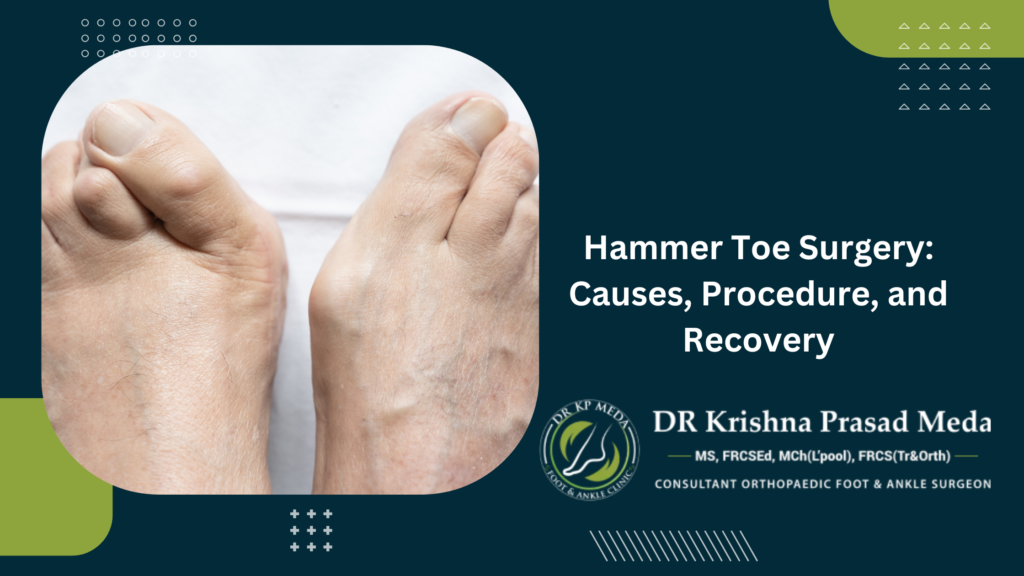
A hammer toe is a deformity where one of the short toe joint bend abnormally, causing the toes to bend downward rather than staying in the normal position, i.e, flat. In most cases, it affects the second toe, but other toes may be affected as well. In this condition, the toe bends downward from the middle joint, resembling the head of a hammer.
This condition arose from an imbalance in the muscles and tendons that typically balance out the toe. Over time, due to persistent imbalances, the toe joint bends abnormally.
Causes of Hammer Toe
The cause of hammer toe cannot be defined due to a single factor; instead, several elements collectively contribute to the development of hammer toe, such as:
- Footwear: Shoes that are narrow and tight in the toe box can cramp the toes, which can encourage an abnormal bend.
- Muscle Imbalance: When a muscle loses its natural balancing power, it shifts pressure towards the tendons and joints, eventually pulling the toe into a downward alignment.
- Age and Structure: Changes in the flexibility of muscles and tendons with aging, as well as genetic foot size and shape, can increase the risk of hammer toe.
In its initial stages, patients can practice non-surgical treatment options to manage hammer toe, such as:
✔Changing footwear to wider, supportive shoes
✔Using toe pads or splints
✔Stretching exercises
✔Anti-inflammatory medications
✔Customized orthotics
If the observed deformity is rigid despite the above measures, hammer toe surgery is the most reliable option.
Types of Hammer Toe
Understanding the types of Hammer toes assists in designing a treatment plan:
❖ Flexible Hammer Toe
In this condition, the toe joint can still move slightly; non-surgical options such as stretching exercises, better footwear, and medications may help in the early stages. If pain and discomfort persist, surgical options may be discussed.
❖ Rigid Hammer Toe
The toe joint is rigid and fixed; conservative measures are barely adequate. Hammer toe surgery is the only primary treatment option.
Procedure for Hammer Toe Surgery
The surgical procedure depends on the severity of the deformity and whether the toe is flexible or rigid.
➤ Tendon Transfer
To strengthen the joint, the tendon at the bottom of the toe can be rerouted. Only if the toe still has some flexibility.
➤ Joint Resection
For rigid deformities, the joint segment is removed to allow the toe to lie flat. To temporarily hold the toe in its position, small metal pins or a rod may be used.
➤ Fusion
In this approach, the ends of the bones that form the toe joint are cut and fixed so they fuse together in a straight position. This prevents movement at that joint but provides lasting alignment.
Most hammer toe surgeries are done as day-case procedures, meaning you go home the same day and start recovery at home
When Is Surgery for Hammer Toes Recommended?
Surgery is usually recommended when:
1-The toe has become stiff and painful,
2-Pain limits daily activities or walking,
3-Corns or calluses develop from constant rubbing against shoes,
4-Non-surgical treatments have failed to provide relief.
Your clinician will evaluate symptoms, toe motion, and overall foot health before suggesting surgery.
How Painful Is Hammer Toe Surgery?
This is one of the most common questions patients ask, and understandably so.
During the operation, local or regional anaesthesia is often used to keep the toe numb, so there’s no pain during the actual procedure. General anaesthesia is another option, depending on medical needs and patient preference.
Some pain and discomfort after surgery occur, but this is usually manageable with medication, rest, and elevation. Most people report that the discomfort after surgery is far more tolerable than the chronic pain they experienced before surgery.
Hammer Toe Surgery Recovery
Post-operative care plays a big role in your outcome.
First Days After Surgery
You’ll likely be sent home with a protective surgical shoe. Keeping the foot elevated helps reduce swelling and discomfort.
Walking and Activity
Many patients can walk with the aid of this shoe soon after surgery, though full normal walking may take longer. Ask your surgeon how soon you can put weight on the foot and when it’s safe to return to regular shoes.
Timeline
Complete healing varies but often takes several weeks. Pins or stabilising hardware may be removed once the bone is stable. Some swelling may persist up to a year, though pain generally becomes much less intense early on in recovery.
Can I Walk Right After Hammer Toe Surgery?
Yes — you can usually walk with help from a protective shoe or walking aid soon after surgery. However, returning to regular shoes and unrestricted walking takes time and should be guided by your surgeon based on your unique recovery progress.
Why Consider Hammer Toe Surgery with a Specialist Like Dr. KP Meda?
Choosing the right surgeon plays a significant role in both outcome and confidence. Dr. KP Meda brings extensive expertise in lower limb conditions and routinely performs corrective foot surgeries, including Hammer Toe Surgery, using evidence-based and patient-centred approaches. With modern surgical techniques and structured follow-up care, patients receive comprehensive support from consultation to recovery.
If you’re considering Hammer Toe Surgery, the best next step is a personalised assessment with an expert like Dr. KP Meda, who can guide you on whether surgery is right for you and what to expect before, during, and after treatment.
Recent Post

Heel Pain Explained: When to Seek Treatment
Heel Pain Explained: When to Seek Treatment Specialty clinics often see many patients who report heel pain as their complaint. Most heel pain starts as

The Health Risks of Having Flat Feet and How to Treat Them
The Health Risks of Having Flat Feet and How to Treat Them Many people are told they have flat feet and never think twice about

Hammer Toe Surgery: Causes, Procedure, and Recovery
Hammer Toe Surgery: Causes, Procedure, and Recovery When every step hurts, Hammer Toe Surgery brings relief and realignment Foot pain might sound like a minor

Is Foot Fungus Contagious?
Is Foot Fungus Contagious? Foot fungal infections are common but very misunderstood. One of the first questions frequently asked by patients is whether or not