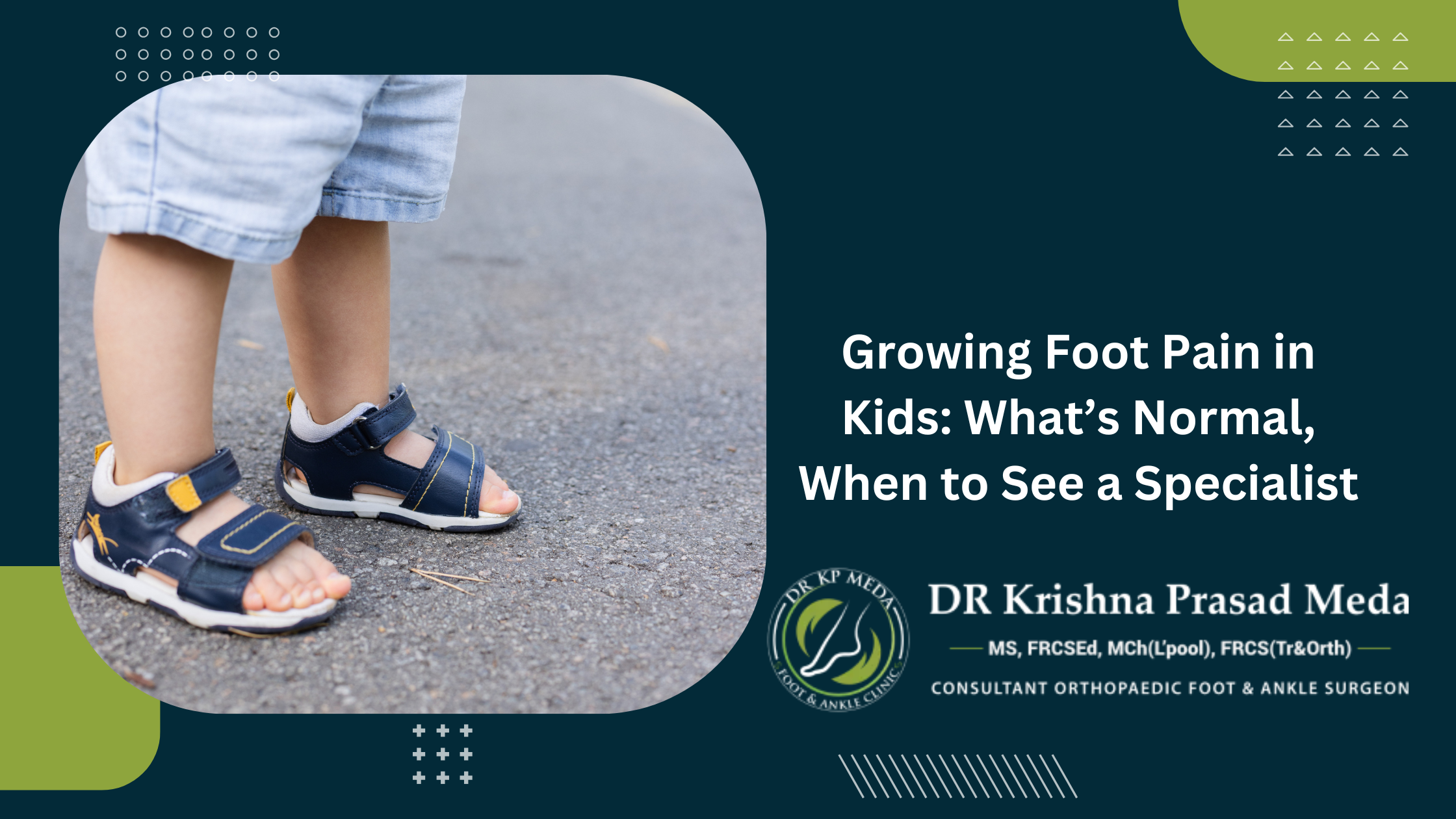
Growing Foot Pain in Kids: What’s Normal, When to See a Specialist
Foot pain is common in childhood, especially as children are growing, running, playing, and staying active. But many parents are concerned when their child complains regularly about foot or leg pain. Understanding Growing Foot Pain in Children can help you understand whether symptoms are normal or a sign of an underlying problem. This guide explains the causes, growing pains symptoms and treatment, the key development phases, and how to manage Foot Care for Children. We also answer one very important question that many parents have asked over time: “When should I be concerned about my child’s growing pains?” We even give expert tips on how to support healthy foot development across childhood.
Understanding Growing Foot Pain in Kids
It is normal for kids to have some aches with growth. Bones, muscles, and tendons are all maturing at a very rapid rate, which can cause temporary discomfort. Growing Foot Pain in Children often occurs at night or following active play. Most of these cases fall into typical growth patterns; however, being able to identify what is considered normal often provides peace of mind for parents.
Children’s feet grow rapidly during early childhood and again during puberty. It is during these times of growth spurts that Growing Foot Pain in Children often becomes noticeable. Pain may affect both feet, ranging from mild to moderate, and usually improves with rest or light massage.
However, repetitive or severe pain is not always due to growth alone. Learning the symptoms and treatments of growing pains helps parents know how to manage discomfort properly.
Key Stages of Development
Recognizing the key stages of development helps parents identify when their child is likely to make changes related to foot growth. These stages also guide how to approach Foot Care for Children and How to support healthy foot development.
Stage 1: Toddler Years (1–3 Years)
At this age, children start to walk, which will affect posture, balance, and the shape of the foot. Flat feet are normal at this stage. Pain is not a common complaint, but if it is, observe the pattern of walking.
Stage 2: Early Childhood (4–7 Years)
This period, one of the most essential key stages of development, involves rapid bone and muscle growth. Generally, at this stage, many kids begin experiencing mild foot or leg discomfort. Growing Foot Pain in Children usually appears during this period, especially after long, strenuous periods.
Stage 3: Pre-Teen Years (8–12 Years)
During this phase of development, bones are lengthening at a very rapid pace; this is due to temporary muscle and tendon tightness. Parents often ask, “When should I be concerned about growing pains in my child?” if pain interrupts activities.
Stage 4: Teen Years (13–17 Years)
The arche, alignment, and gait patterns will all vary as the body readies for full adult growth. Proper footware must be utilized. Pain begins to relate more to sport or overuse than to normal growth.
By learning these milestones, parents will have a much better idea of what is normal discomfort and what needs attention by professionals.
Common symptoms and treatment of growing pains
Knowing the common Growing pains symptoms and treatment is important for proper home care. Common growing pains include:
- Pain in both legs or feet, mainly at night
- Intermittent pain that does not deteriorate over time
- Pain that is relieved by massage, stretching, or warmth
- No swelling, redness, or limp
These sensations are normal and form part of Growing Foot Pain in Children. For relief, the following home remedies will come in handy:
- Light stretching of calf and foot muscles
- Massaging the legs before bed.
- Warm compresses
- Proper hydration
- Comfortable, supportive shoes
These steps will really help in managing growing pains symptoms and treatment at home.
How to Support Healthy Foot Development
Parents commonly ask the professional a question: How to ensure healthy development of feet during growth periods. Well, here are some essentials:
1. Proper Shoes
The child should use shoes that have cushioning, arch support, and space for the toes to wiggle. Ill-fitting shoes can worsen growing foot pain in children.
2. Barefoot Time
Walking barefoot will help strengthen the muscles and improve balance in toddlers and children.
3. Regular Exercise
Encourage safe physical activity that helps make their bones and muscles strong, which includes how to support healthy foot development.
4. Foot hygiene
Care of the feet should include daily washing, proper nail trimming, and dryness of the feet for children.
5. Growth Monitoring
Note if pain is repetitive or intense; note when it occurs: This will help confirm whether it is just Growing Foot Pain in Children or might need some help.
These daily habits will help support your child through much smoother development during the key stages of development.
Care of the Feet in Children
The long-term comfort and structure of the foot mainly depend on proper foot care in children. Some foot care tips that are necessary include:
- Checking shoes every 3–4 months, as children’s feet grow very fast
- Wearing socks of proper fit and made of breathable materials
- Teaching the child to clean and dry his feet every day
- Encouraging stretching exercises to reduce muscle tightening during growth spurts
The Good Foot Care for Children prevents avoidable problems and aids in effective recovery from typical Growing Foot Pain in Children.
When Should I Worry About My Child's Growing Pains?
Parents naturally ask, “When should I be concerned about my child’s growing pains?” Certain signs and symptoms demonstrate that pain may not be related to normal growth:
- Pain involves only one foot or leg
- Swelling, redness, or bruising is present
- Pain persists during the day.
- There is limping or difficulty walking
- It worsens over time.
- Discomfort is not relieved by home treatment
If these conditions do occur, then it is not normal Growing Foot Pain in Children and it would be best to visit a pediatric specialist.
The question of concern becomes, “When should I be worried about my child’s growing pains?” when pain interferes with daily activities, sleep, or results in changes in behavior. Early evaluation helps avoid long-term problems.
When to Consult a Specialist
A specialist can diagnose abnormalities in foot structure, gait, or bone growth. If the child frequently complains of pain or shows signs of abnormal walking, a pediatric orthopedist should evaluate the condition. These professionals can help determine whether the symptoms align with normal growth or a treatable condition. Early treatment within key stages of development is necessary to avoid possible complications in the future, such as flat feet deformity, gait imbalance, or postural problems
The importance of seeing a Pediatric Foot doctor
With an understanding of Growing Foot Pain in Children, parents can confidently and calmly respond when discomfort arises. Now that you know what to look for in typical Growing pains symptoms and treatment, the important stages of development, how to continue with consistent Foot Care for Children, and how to support healthy foot development, you’ll be better equipped to take care of your child’s feet. And always remember to ask yourself, “When should I be concerned about my child’s growing pains?” If symptoms persist or seem unusual, don’t hesitate to consult a specialist.
Dr. KP Meda is a highly experienced orthopedic specialist with over 23 years of expertise, offering expert care and personalized guidance to keep your feet healthy and pain-free.
Don’t allow minor concerns to turn into major problems. Schedule your appointment today and take the first step toward better foot health and overall well-being.
Recent Post

Growing Foot Pain in Kids: What’s Normal, When to See a Specialist
Growing Foot Pain in Kids: What’s Normal, When to See a Specialist Foot pain is common in childhood, especially as children are growing, running, playing,
Ankle Sprain vs. Ankle Fracture – Know the Difference
Ankle Sprain vs. Ankle Fracture – Know the Difference Ankle injuries are extremely common, whether they occur during sports, daily activities, or sudden accidents. One

What Are 7 Common Foot Problems
What Are 7 Common Foot Problems? Know the 7 Foot Issues That Could Be Slowing You Down! Your feet carry you through every step of

7 Easy Steps to Relieve Plantar Fasciitis and Heel Pain
7 Easy Steps to Relieve Plantar Fasciitis and Heel Pain Do you feel a sharp and stabbing pain in your heel, especially when you take