
Symptoms of flat feet: When to see a doctor
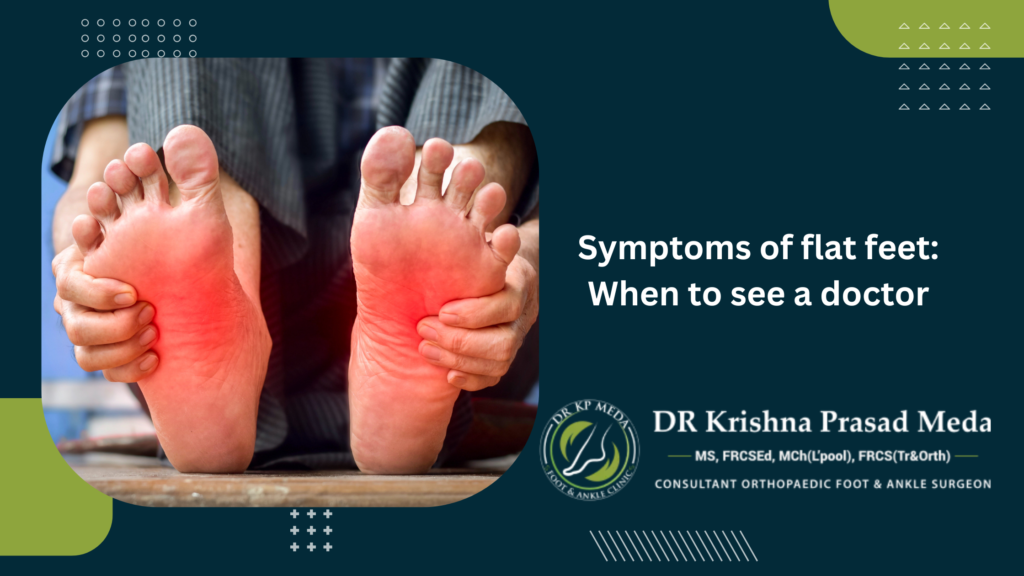
Flat feet symptoms are not always a problem. Many people have a low or missing arch and still walk fine. But flat feet can also cause pain, change how you move, and lead to other issues in the foot, ankle, and even up the leg. If you have flat feet, paying attention to the signs and symptoms of flat feet can help you decide when assessment is worth it.
At Dr KP Meda’s foot and ankle clinic in Dubai Hills, we see patients who thought their aches were “just shoes” or “just getting older”. Often, the story is different. Sometimes the arch never formed properly in childhood. Sometimes it collapses later. And sometimes, the symptoms show up quietly at first.
This guide is about flat feet and what to watch for, plus when it is time to book an appointment for flat feet symptoms and treatment advice.
Signs and symptoms of flat feet in kids and adults
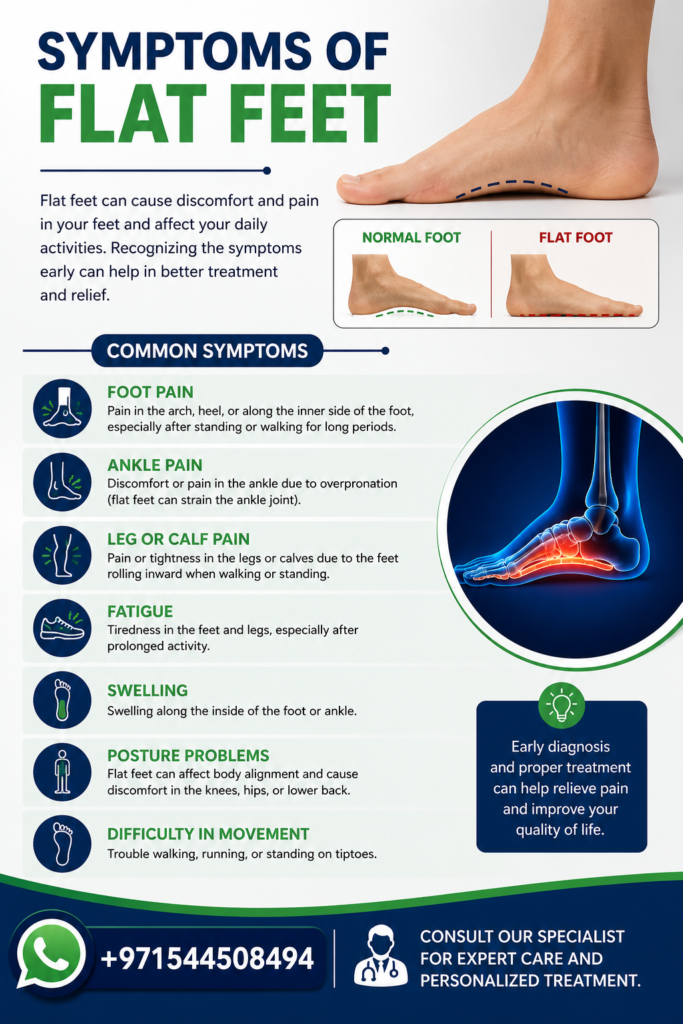
Signs and symptoms of flat feet can vary a lot. Some people notice nothing at all. Others feel it quickly, especially when standing, walking, or being active. The key is noticing patterns over time. Common flat feet symptoms:
Foot pain, especially in the arch area or along the inside of the foot and ankle.
Ankle pain, sometimes linked with overpronation, meaning the foot rolls inward more than it should.
Swelling along the inside of the ankle.
Pain that gets worse with activity.
Feeling weak when trying to push off or stand on toes.
Pain that is worse in footwear with little support, like sandals.
Pain that is worse when walking barefoot.
Other changes you might notice:
Your foot may feel less stable when you walk.
You may start to change your stride without realising it.
Some people develop problems that feel “secondary”, like overuse aches around the lower leg.
For kids, the common background is that flat feet can be normal in infancy and early childhood. Many arches develop as children grow. Some do not, and those children may later show symptoms.
What causes flat feet in kids and adults?
What causes flat feet in kids and adults depends on the type. Flat feet can be present from childhood, or acquired later when the arch collapses.
In kids:
Some children have flexible flat feet. The arch may appear when they are sitting or on tiptoes, but disappears when they stand.
Some children do not develop normal arches. This can be related to genes and normal development differences.
In adults:
Flat feet can happen after injury to the foot or ankle.
It can also develop with age and wear and tear.
The posterior tibialis tendon can weaken or tear over time, and this can affect arch support.
Conditions such as diabetes can contribute through changes in the foot tissues and mechanics.
Inflammatory conditions like rheumatoid arthritis can also affect arch structures.
If you have wondered “why me” after years of okay feet, it may be the arch changing rather than your shoes suddenly being wrong.
When should you see a doctor for flat feet symptoms?
Not every case needs treatment. But you should see a healthcare professional if your symptoms are persistent, worsening, or limiting your activities. Flat feet can be painless. Still, pain is the big clue. Consider a doctor or foot and ankle specialist visit if:
Foot pain is limiting what you want to do.
Ankle pain or swelling is becoming frequent.
Pain gets worse as you walk or exercise.
You feel weak when pushing off or standing on toes.
You are needing supportive shoes just to be comfortable, all the time.
The problem is affecting knees, hips, or the lower back in a recurring way.
You notice changes in walking pattern that do not improve.
For children, get help if foot pain is clearly present, especially if it affects school activities, sports, or daily play.
Also, if the flat feet symptoms and treatment question keeps coming back in your mind, that is often a sign you should be assessed rather than guessing.
Flat feet symptoms and treatment: What to expect at an appointment?
When you come to see Dr KP Meda, the approach is straightforward and practical. We do not jump straight to “fixing” anything. We start with understanding what is happening and whether your symptoms match the mechanics of your foot. A doctor can usually diagnose flat feet on physical exam by observing:
Foot shape and arch height.
Heel position and whether it rolls outward.
How the foot moves with standing and walking.
How your foot works during gait.
Sometimes, imaging such as a foot X-ray may be used to confirm flat feet or to look further into the underlying cause. The aim is to connect the dots between what you feel and what the foot is doing.
Flat feet symptoms and treatment options
Depending on your pain level and cause, options may include:
Over the counter pain relievers when needed, such as NSAIDs or acetaminophen, if safe for you.
Physical therapy exercises that stretch and strengthen the feet.
Orthotic shoe inserts or walking supports.
Supportive footwear advice to improve comfort and reduce strain.
If symptoms are frequent or significant, and especially if there is an underlying tendon or structural issue, further treatment may be recommended. In some more severe cases, surgery may be considered, but that is not the starting point for most people.
What happens if you ignore flat feet symptoms?
Flat feet can be manageable. Many people live normally without major problems. Still, ignoring symptoms is not a great plan.
If your arch is collapsing or your foot is rolling inward repeatedly, extra stress can transfer to the ankle and other areas. Over time, this can contribute to ongoing pain, instability, and other lower body discomfort. So even if the arch looks “fine”, your symptoms matter more than appearance.
Prevention and self-care for flat feet symptoms
There is not always a clear prevention plan. Some people are simply born with flatter arches or develop them differently. But self-care can reduce stress and improve comfort. Helpful steps include:
- Maintain a healthy weight where possible, because it can affect load through the feet.
- Choose shoes with adequate support, not just soft soles.
- If advised, use orthotics consistently rather than occasionally.
- Do recommended stretches and strengthening exercises regularly.
- If you walk barefoot often at home and you feel pain, consider reducing that while you figure things out.
- For kids, it is similar but with more patience. The goal is to help symptoms, not force changes.
If symptoms are mild and the child is comfortable, observation can be reasonable. If pain appears, evaluation becomes more important.
Take the first step toward pain-free movement
You do not have to live with persistent foot fatigue or let ankle aches limit your daily activities. Left unmanaged, mechanical imbalances from flatter arches can place unnecessary strain on your entire lower body. Securing an expert, clinical evaluation is the most effective way to protect your long-term mobility.
Dr KP Meda at the Foot and Ankle Clinic in Dubai Hills provides compassionate, highly specialised care designed to restore structural alignment and alleviate your discomfort.
Whether you need custom orthotic casting, a comprehensive gait analysis, or a targeted physical therapy plan, our team will design a practical pathway tailored precisely to your feet. Reclaim your comfort today. Book your comprehensive consultation at the Foot and Ankle Clinic now.
FAQ’S
Flat feet symptoms can include foot pain in the arch area or along the inside of the foot and ankle, ankle swelling, pain after walking, and pain that worsens with activity. Some people also notice weakness when pushing off.
Not always. In kids, some children have flexible flat feet where the arch appears on tiptoes but flattens when standing. Adults more commonly notice gradual changes when the arch collapses or after injury.
What causes flat feet in kids and adults can include genetics and failure of arches to develop normally, plus acquired causes like injury, tendon dysfunction, arthritis, aging, and diabetes.
For mild symptoms, flat feet symptoms and treatment often starts conservatively: Supportive footwear, physical therapy exercises, and orthotic shoe inserts. OTC pain relief may be used if appropriate.
You should see a doctor if foot pain or ankle pain is limiting activity, worsening, or associated with swelling. A specialist can assess the foot mechanics and recommend flat feet symptoms and treatment based on your cause.
Some people experience worsening, especially if acquired causes are present and the arch continues to collapse. If symptoms are increasing, it is better not to wait.
Recent Post

Exercises you need to avoid if you have Plantar Fasciitis
Exercises you need to avoid if you have Plantar Fasciitis Pain in any part of the body can be limiting , especially when you are
How to relieve pain on bottom of foot: Causes & Treatment
How to relieve pain on bottom of foot: Causes & Treatment The first steps in the morning can feel like a rude awakening when a
Why Does My Ankle Hurt When I Walk? Symptoms & Treatment
Why Does My Ankle Hurt When I Walk? Symptoms & Treatment You’re not alone if you’ve ever wondered, “Why does my ankle hurt when I

Ankle Pain Causes You Shouldn’t Ignore
Ankle Pain Causes You Shouldn’t Ignore Ankle pain is something many people experience at some point in their lives. Whether it starts after a long
